
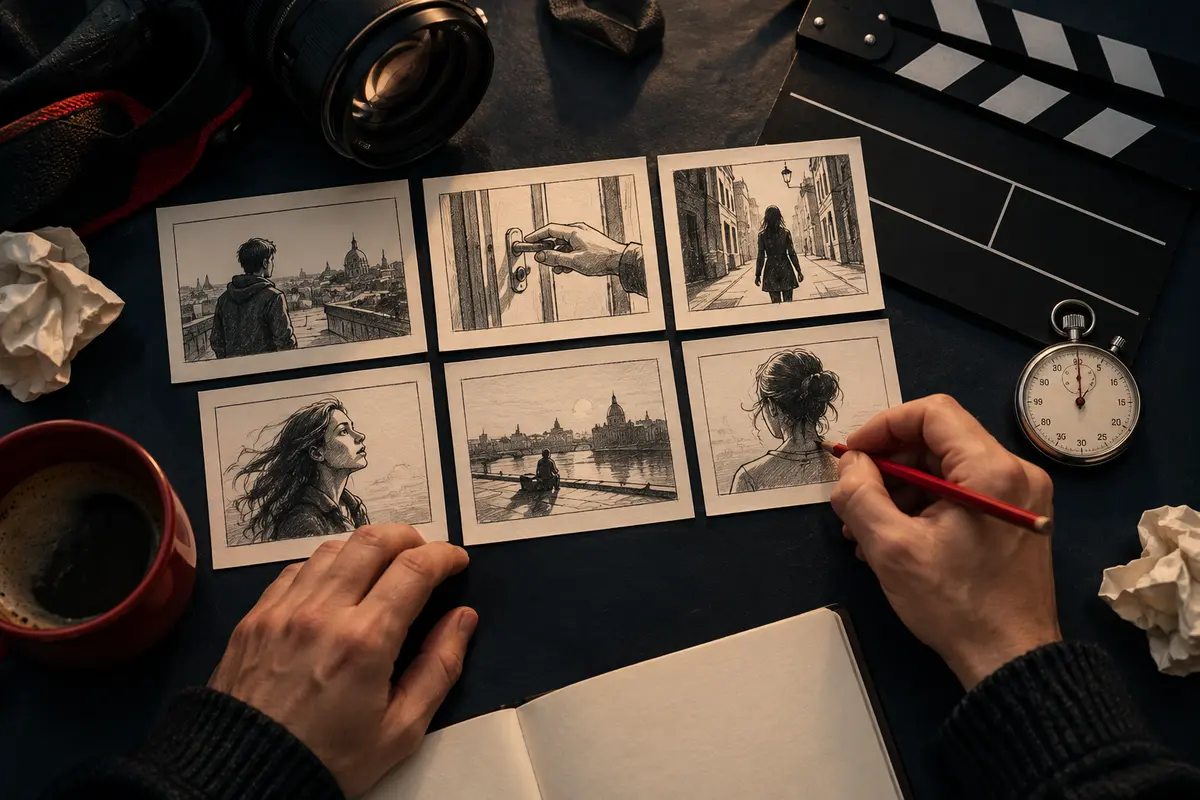
Choose one thing that genuinely changes
Try expressing the idea in a single sentence: someone wants something, encounters an obstacle and responds. This is a tool for organising fiction, not a compulsory formula for every form. A documentary might begin with one gesture or event; an animation might use an object's transformation to convey emotion or meaning.
Instead of compressing a character's biography into a minute, choose a moment that leaves the audience understanding something new. Not every short needs a surprise ending. An attentive look, a situation allowed to resonate or a consistently developed rhythm may be enough. What matters is helping viewers know where to place their attention.
Plan the timing before you start shooting
Make a simple timing plan for your shots. If the title and credits use six seconds, fifty-four remain for the main material. Read dialogue aloud with natural pauses. Words that fit comfortably on a small sheet of paper do not necessarily fit a recording without losing clarity or credibility.
You could use a 10–35–10-second structure as an exercise: brief orientation, development and consequence, leaving five seconds for necessary credits. This is a workshop example, not a jury requirement. An observational documentary or a film made in one shot may need a completely different allocation of time.
Let image and sound do different jobs
If a character says exactly what the audience can already see, two layers may be communicating the same information. Ask whether sound could reveal something outside the frame or prepare the next event. But do not make every scene a puzzle: a minute calls for selected information, not automatic obscurity.
List shots by their function. Which establishes a character's goal? Which reveals an obstacle? Which changes the meaning of an earlier image? If two shots do the same job, consider keeping one. If you use music or other third-party material, check that your permissions cover its use in the submitted film.
- Choose one central idea and map its progression.
- Reserve time for the title, logos and required credits.
- Test dialogue aloud rather than just counting words.
- Give each shot a specific storytelling function.
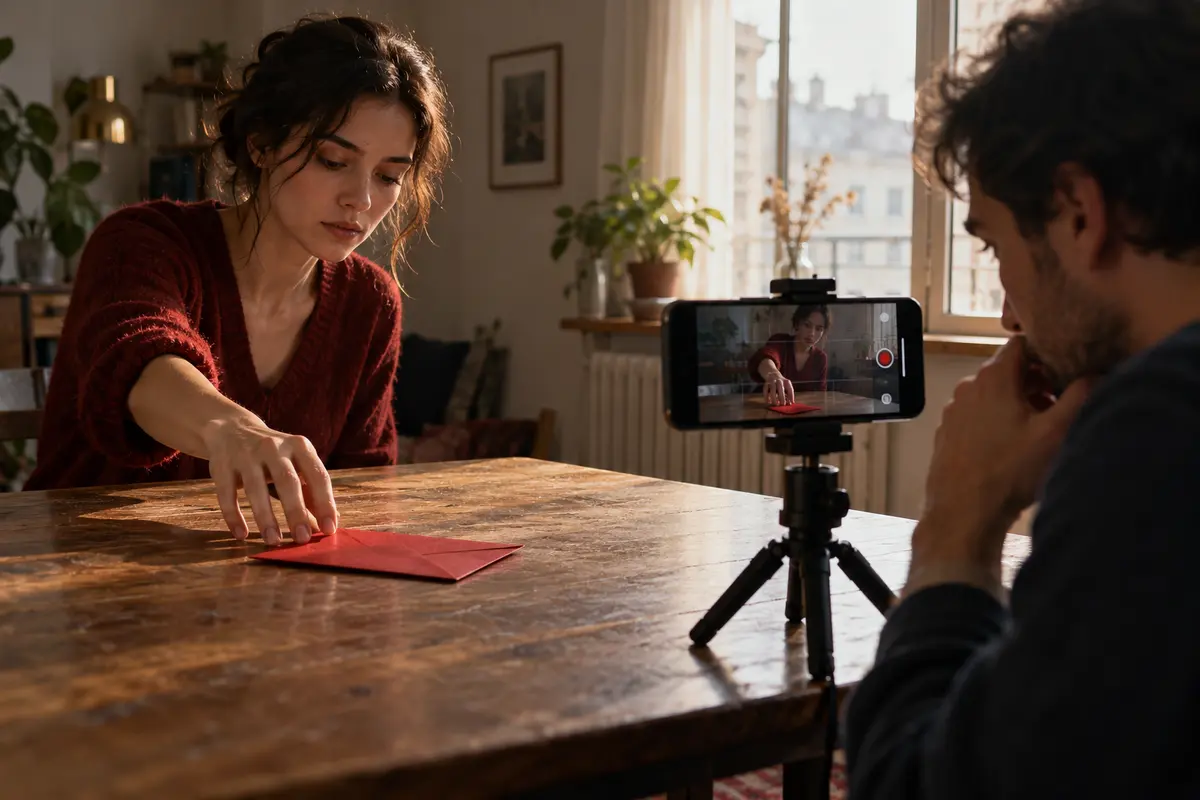
Editing: test what survives without your explanation
Show a rough cut to someone unfamiliar with the screenplay, without explaining the plot beforehand. Ask what they noticed and how they understood the change in the film. You do not need to adopt every suggestion. The test helps distinguish deliberate ambiguity from information that was unintentionally lost during editing.
Watch the film without sound, then listen to the soundtrack on its own. Notice unnecessary repetition and subtitles that move too quickly. Shortening should not consist only of speeding everything up. Removing one explanation, retaining a clear gesture and allowing time to read it can be more effective.
Preparing a one-minute entry for WSFF
In WSFF's one-minute categories, the total film must not exceed 60 seconds. This covers fiction, animation and documentary, including credits and every other element. The film must have been completed in 2025 or 2026. Check the current description of any additional categories displayed on the submission platform.
The submitter must be at least 18 and have the required authority. Prepare English subtitles in accordance with the rules; Polish-language films may provide them after selection. Before entering through FilmFreeway, watch the final export and check its exact duration. A short format still needs a complete, accessible submission.
Questions and answers
Does a one-minute competition film have to last exactly one minute?
No. In WSFF's one-minute categories, 60 seconds is the maximum total duration, not a required length. A shorter film can be submitted if it meets the other requirements of the relevant category and festival rules.
Can credits sit outside the 60-second limit?
No. The limit includes opening and closing credits, logos and every other part of the file. If the final export exceeds one minute, it does not meet WSFF's one-minute category limit. Plan space for credits during editing.
Does the one-minute film competition include documentary and animation?
Yes. WSFF's rules include one-minute fiction, animation and documentary categories. Choose according to the film's dominant form. Always check current category availability and descriptions in the FilmFreeway submission form.
Does a one-minute film need dialogue?
No. A film can tell its story through images, action and sound without dialogue. However, titles or other text essential to understanding may need an English translation. A wordless film must still meet the remaining competition requirements.
Can I make a one-minute film in a single shot?
The time limit itself does not rule this out. A single shot may focus attention or build tension, but should serve your idea. WSFF does not require a particular number of shots; the completed film and its form are assessed.
How do I submit a one-minute film to Warsaw Short Film Festival?
Visit WSFF's FilmFreeway profile, check the current description of the appropriate category and prepare the complete film with the required information. Before paying, review the rules, file duration, completion year and subtitle requirements.